Obedient to Death. Now Death is Obedient to Him.

“Who, being in very nature God, did not consider equality with God something to be grasped, but made himself nothing, taking the very nature of a servant, being made in human likeness. And being found in appearance as a man, he humbled himself and became obedient to death–even death on a cross!” Philippians 2:6-8

In the beginning in the garden, God presented man with two choices: the tree of life and the tree of knowledge of good and evil. He told them that choosing the latter would bring death and yet, deceived by the serpent, they chose it still (Genesis 3). Promised by Satan that they would receive enlightenment and and freedom, they instead, received darkness and slavery. Death became their master and so it has become the master of us all. In their pride, Adam and Eve chose death and now every human since has been made obedient to this one final fate. Over and over again, death has won the day.

Easter is the startling interruption to this story for in Easter, we see Jesus, the new Adam, also choose death. However, it was not in pride, but in humility, that He chose to take on this burden. Indeed, He was the one man over whom death had no right for He had committed no penalty. Not only was He a righteous man, but He was God in the flesh. He had every right to live and yet, He chose to die. Subjecting Himself to the laws of mortality, the flesh He created was pierced. The heart that He formed stopped beating. The lungs He filled ceased breathing.

On Good Friday, the ruler of the universe and the author of life made Himself obedient to death, but on Sunday, He made death obedient to Him. In His resurrection, Jesus obtained mastery over our master so that He might set us free. Descending into our prison, He emerged with the keys (Revelation 1:18).

Now, for those who believe in Him, death has been transformed. It is no longer a thief, but a giver. No longer a threat, but a hope. Now death leads us not into eternal punishment, but eternal life. What was destroyed in the garden will be restored. What was wrong will be made right. There will be no more tears or suffering or pain. Death’s dark shadow will be forever vanquished in the light of the risen Son (Revelation 21:4). The tree of life, lost to us through our sin, will be restored to us through His blood. “Blessed are those who wash their robes, that they may have the right to the tree of life and may go through the gates into the city” (Revelation 22:14). There we will worship forever the One who by His death, gave us life, conquering our conqueror and breaking our chains.

“Therefore God exalted him to the highest place and gave him the name that is above every name, that at the name of Jesus every knee should bow, in heaven and on earth and under the earth, and every tongue confess that Jesus Christ is Lord, to the glory of God the Father.” Philippians 2:9-11

The Prosperity Gospel’s Deadly Whisper

“Find rest, o my soul, in God alone; my hope comes from him. He alone is my rock and salvation; he is my fortress, I will not be shaken. My salvation and my honor depend on God; he is my mighty rock, my refuge. Trust in him at all time O people; pour out your hearts to him, for God is our refuge” (Psalms 62:5-8).

That was the verse shared by someone at church about four months ago, a verse I memorized in college. But that Sunday, I just thought, “That’s nice. I like that verse” and moved on with my life. Only later did I realize it was for me, that it was the verse God was giving me as the theme for the season of trial He was about to lead my family through.

A week or so later, my husband lost his job. We had just come off a year of great blessing. Great new job. Great new house. Beautiful new baby. This year could not look any more different. Unemployment. Sickness. Job offers falling through. Maybe we’d put too much stock in these earthly blessings. “Are you punishing us, Lord?” I wondered. Not punishing. Refining. Refining our hope. Refining our rest.

What does it mean when trials come regardless of “good behavior”? This is the great question of the book of Job.

The truth is, we all want a simple calculus. Do good. Get good. Do bad. Get bad. Obey. Reap blessings. Disobey. Reap trials. We want God to operate on our terms. It’s no different, really, from the Old Testament draw to idol worship. Gods made of human hands can be controlled by human hands. They are manipulable. Containable. Predictable. Non-threatening.

A living, breathing, omnipotent, sovereign God on the other hand? That can be a terrifying thing. He cannot be controlled or manipulated. He lives far above us in heaven and does all that He pleases (Psalm 115:3). His judgments are unsearchable and his ways are inscrutable (Romans 11:33). If we submit to Him (or not), we are very much at His mercy.

Trials have a way of revealing what we really believe about God and about ourselves. I could give you a point by point run down of the Gospel.  I can scoff at Prosperity Gospel preaching and provide a scriptural rebuttal and yet, its seductive whispers can sneak behind my theologically equipped mind and make their way into my more vulnerable, more wayward heart. It is there that God is sifting.

I must confess that I can want God to behave more like an idol, to be a tool in my hands that I bend into making my life what I think it should be. I can want the Prosperity Gospel to be true.

As we have endured and continue to endure this season, it has forced me to ask myself some questions. Do I really believe that God is sovereign? Is the misfortune that has come our way a product of bad luck or divine providence? What has God promised me? Comfort, ease, and a life free of trouble? Or a hope, a joy, and a peace that remain in spite of trouble? What is the purpose of my life and what role does God play in it? Is my life about me and is God my fairy godmother who makes all my dreams come true? Or is my life about Him and His glory?

The answers to these questions directly determine how we respond in trials and suffering. I cannot pretend that my answers have always been the “right” ones. The verses I’ve been most drawn to are from Psalm 77. “Has his steadfast love forever ceased? Are his promises at an end for all time? Has God forgotten to be gracious? Has he in anger shut up his compassion” (v. 8,9)  My soul has refused to be comforted (v. 2), and yet still searched diligently to remember the deeds of the Lord (v. 11). I believe. Help my unbelief.

The lie of the enemy is that God owes us much and yet, withholds much. The truth of the gospel is that God owes us nothing but wrath and yet, gives us nothing but grace. Which will I believe?

I do not serve a god made of clay, fashioned by human hands, but the great and mighty creator and ruler of the universe. He has redeemed my life from the pit and it is His to do with as He pleases. He is not a good luck charm I invoke when trials come. He is my refuge when trials come. He is not making a plan for my life. He is making my life for His plan.

No one cares if we praise God when the sun is shining, but the world will stop and marvel when we praise Him in a storm, when our worship operates completely independently of our circumstances. That is the mark of a faith that is really real, of a heart that loves God for Himself and not for His blessings.

I am weak and weary, but I pray that trials will prove the tested genuineness of my faith, refined like gold in the fire, and resulting in the praise and glory and honor of Jesus Christ (1 Peter 1:7). I have faltered and will no doubt falter again, but I am resolved to say with Job, “The LORD gave, and the LORD has taken away: blessed be the name of the LORD” (Job 1:21). “Though he slay me, yet I will hope in him” (Job 13:15).


Holiness Made Its Home Among The Cursed

At Easter, it is natural to reflect upon the death and resurrection of Christ. This year, I find myself also thinking upon the broader scope of His life and its meaning for us. What does it mean that He was Emmanuel? What does it mean that God not only forgave our sins, but came to dwell among us, the sinners? It means God was not merely after forgiveness, but restoration. Restoration of the world in its entirety. Restoration of the human condition in its entirety.

You don’t have to look far to see that we live in a broken world. There is pain. There is injustice and evil and grief. We can find that even our greatest joys can be tinged with sadness as if we know things are still not what they should be. We can be haunted by the dauntless specter of death, our one shared and final fate though something tells us it shouldn’t end that way. Why? Why is the world fraught with sorrow? Why does life end in death? Because we are fallen. We bear the curse of our sin and every square inch of creation bears it with us (Romans 8).

Yet in the life of Christ, we see mercy dawning. We see God retracing the steps of the Fall. We see the Holy One enter the cursed womb and set into motion our ransom, our rescue. The first place He sent sin’s curse was the first place He sent sin’s cure. And there is nowhere He has commissioned His curse that He has not also commissioned His grace, no scars of His judgment that He has not also touched with the healing of His redemption.

The incarnation means that Holiness made its home among the Cursed. Yahweh, a name too sacred to be spoken by our tainted lips, became Emmanuel, God With Us. How astounding that the holy, eternal God entered into the wasteland of our transgressions. How astonishing to see Him be born of a sinful woman, labor among the thorns and thistles of our cursed ground, touch and heal the sick and perishing, and finally, die the shameful death of a common sinner.

Christ, the God-man, our lamb and conqueror, subjected Himself to our curse that He might defeat our curse. The Lord laid on Him the iniquity of us all (Isaiah 53:6). Who could but falter under such an unfathomable burden? Yet, He never did. He carried it to completion and finally, cast it off, hurling our iniquities into the depths of the sea (Micah 7:19) and with them, our condemnation. Now we find the wrath of God is quenched, spent, satisfied like a fire which finds nothing left to burn. Its cup is emptied. Not a drop remains for He drank it all for thee.

What, then, remains for us to fear? What part of our curse shall hold terror for us still? Shall we fear the womb, be it emptied or filled or aching with the pain of loss? No, for our Lord has been there. Shall we live in dread of sickness? Jesus has taken up our infirmities (Isaiah 53:4). Shall we falter under the burdens of loneliness, grief, persecution? He has been well acquainted with them all (Isaiah 53:3). Shall we tremble as we face our final breaths? No, for Christ has breathed them before us.

He has lived and hurt and died, not merely pardoning us from afar, but entering fully into our human experience and leaving grace for all and in all in His wake. Yes, this ground we tread is cursed still, but now Holiness has been here, sowing the seeds of redemption. For now, they may seem to lie dormant as in winter, or barely shooting up, as in the first, fledgling moments of spring, but someday…someday, they will burst into full bloom. They will chase away the curse forever. All will be made new. It will. It will.

“The desert and the parched land will be glad; the wilderness will rejoice and blossom. Like the crocus it will burst into bloom; it will rejoice greatly and shout for joy….” Isaiiah 35:1,2

“But only the redeemed will walk there, and the ransomed of the LORD will return. They will enter into Zion with singing; everlasting joy will crown their heads. Gladness and joy will overtake them, and sorrow and sighing will flee away.” Isaiah 35:10

jesus walking

Good Friday Was Bad

The older I get, the more I become aware of life’s fragility, of our precarious position in this world. We are not promised tomorrow, nor even tonight. What’s more, neither are our loved ones. Living is risky and loving is even riskier. Motherhood has made me all too aware of this. From ISIS and the zika virus and just basic human error the endless list of what if‘s could bring a mother to the brink of insanity. I think with each pregnancy, I will confront fear again and again. I can be haunted by the words of Job, “What I feared has come upon me; what I dreaded has happened to me…”

The question then, is what is the answer to the problem of our fears? Is it a blind, unfounded belief that bad things won’t happen to us? Do we just tell ourselves God wouldn’t do that? I don’t think so because we can plainly see that bad things do happen to people. As scripture tells us, God not only lets them happen, but He ordains all that will come to pass. How then can we know that this God, this sovereign God is really good? How may we look our fears in the face, knowing that they might all come true and yet believe that God is trustworthy?

Whenever I wrestle with the sovereignty of God and the existence of evil and suffering, a profound mystery, God always leads me to the surer, solid ground before the cross. We celebrate today, the day Jesus died, and we call it good, but the truth is, it wasn’t really good. Good Friday was bad. Nothing could have been more disastrous, more terrible for followers of Jesus than the death of the one on whom they had pinned all their hopes.

But it wasn’t even just that it seemed bad at the time. It was really wrong. It was really evil and unjust that Jesus, who had committed no wrong, was crucified at the hands of those who had. Jesus himself, when they came to arrest him, said, “But this is your hour when darkness reigns” (Luke 22:53). What a startling statement for the light of the world to make. God purposed that darkness, evil, should reign–but only for a time. For we know that the real injustice wrought by man was, at the same time, mysteriously coinciding with God’s perfect justice against sin and amazing grace to sinners. You see, the cross tells us that God always re-purposes or rather, “supra-purposes” evil and suffering. What man intends for evil, God intends to work for the good of those who love Him and are called according to His purpose (Genesis 50:20, Romans 828).

So my answer to my fears and worries is not some wishful belief that they will not happen, that they could not happen. As they happened to Job, they could happen to me. All that I fear might come to pass and it might be truly bad, truly wrong. Yet if I follow the logic of Romans 8, the logic of the cross, I find the freedom to walk in faith instead of fear. Good Friday was bad, but now it is so very, completely good. Through His resurrection, Christ redeemed His own death and if He can redeem such a great wrong, He can and will redeem all the pains and sorrows of those He suffered so greatly to purchase. If He can redeem the cross, He can redeem anything and if He can redeem anything, we have nothing to fear. That is not trite, vain hope, but plain, solid truth to which our souls can firmly hold.


The Lesson of Our Mortality

In the past few days, I’ve had a lot of tragic reminders that life is short and that it is often filled with pain and sorrow. Our lives are more fragile than we care to admit. Our position in the world, which seems to us to be so fixed, is far more precarious than we are willing to believe. We suppress this truth. We deceive ourselves into believing that we have always been and we will always be, but this is folly. We imagine ourselves to be great and enduring when, in reality, we are small and fleeting.
“The ransom for a life is costly, no payment is ever enough—that he should live on forever and not see decay. For all can see that wise men die; the foolish and the senseless alike perish and leave their wealth to others. Their tombs will remain their houses forever, their dwellings for endless generations, though they had named lands after themselves. But man, despite his riches does not endure; he is like the beasts that perish” (Psalm 49:7-13).

Thus, it is good, even vital, for us to ponder the transience of our own existence, to stare our mortality in the face and make sense of it. “It is better to go to a house of mourning than to go to a house of feasting for death is the destiny of every man; the living should take this to heart” (Ecclesiastes 7:2). I urge you then, take it to heart. Of course, it’s easier to ignore. Our mortality makes us uneasy. It makes us afraid. We could be snatched from this world at any moment. Our loved ones might be taken. How then, do we live? How may we walk in hope and not in an ever-present, all-consuming fear of our fixed fate?

We hope in Jesus, not in ourselves. We fix our eye on the resurrected One who put death to shame. We invest, not in this world, which is susceptible to decay, but in the heavenly “city with foundations, whose architect and builder is God (Hebrews 11:10). We bear up under the stings of a broken world and walk the path of death because we know that death will not win the day, but it will be swallowed up in victory (1 Corinthians 15:54). Death, our greatest enemy, “has failed to be found equal to the life of Him who saves.” Jesus is risen. He has conquered. He has atoned. He will make all things new.

“Then I saw a new heaven and a new earth, for the first heaven and the first earth had passed away, and there was no longer any sea. I saw the Holy City, the new Jerusalem, coming down out of heaven from God, prepared as a bride beautifully adorned for her husband. And I heard a loud voice from the throne saying, ‘Now the dwelling of God is with men, and he will live with them. They will be his people, and God himself will be with them and be their God. He will wipe every tear from their eyes. There will be no more death or mourning or crying or pain, for the old order of things has passed away.’ He who was seated on the throne said, ‘I am making everything new!’ (Reveleation 21:1-5).

8 Things I Learned in My First Year of Motherhood

This is definitely a departure from my normal type of post. Since my son just turned one, I thought I’d take a break from more serious topics and do something a little more light and hopefully humorous. I’ve only got one year under my belt so I am by no means a motherhood expert, but thought I’d share a few things I’ve learned. Hopefully, current moms and those about to become moms can laugh, relate, and maybe be a little bit scared.

1.  An epidural is your friend .

First thing’s first. you have to actually have the child, right? As you may have heard, this involves some pain that we women have to endure because, well, Eve really wanted some fruit. I’m not sure where an epidural fits into the whole curse thing, but I like to think it’s an expression of God’s mercy and forgiveness to us.

Let me be clear that I have nothing against those women who choose to do without or even give birth at home. These women amaze me and I actually wonder sometimes if I could be one of them. Buuut I’m pretty sure I was born without that level of pain tolerance and I’ve got nothing to prove so as for me and my house, we shall be anasthetized.

2. Projectile poop is a thing.

Your newborn comes with fully loaded bladder and bowels which they have absolutely zero control over. And since their stomach is the size of a pea and all they eat is milk, it can pretty much shoot out of them in any form at any given moment. There is no conclusive scientific evidence that these miniature people plot to wait to relieve themselves until the diaper has been removed, but in my experience, there does seem to be an indication of premeditated peeing and pooping. Advice: keep carpet cleaner on hand.

3. Your body is capable of operating (okay, semi-operating) on way less sleep than you thought.

As aforementioned, when your baby is born, their stomach is the size of a pea and they are not much bigger so they are eating constantly in order to stay full and put on weight. This means you are now a milk cow. A full-time milk cow. Your baby does not know or care that you are so tired you can’t see straight. Daytime and nighttime mean nothing to them. You might wonder if you will ever sleep again. You will. Though you think you might actually just fall over and die from sleep-deprivation, you won’t (probably).

4. Your wardrobe choices will totally depend on your ability to breastfeed.

Gone are the days when you picked your clothes based on weather, fashion, and if they actually look good on you. Say goodbye to that cute dress with the high neck or tight straps. Remember, you are now a milk cow. If you won’t be able to halfway undress yourself at any given moment, then it isn’t going to fly.

5. You will breastfeed in the strangest places.

Basically, all of these points center around the fact that you are now a milk cow. If you actually want to have a life and go anywhere or do anything the first year of your baby’s life, you’re going to have to get over your self-consciousness of breastfeeding in public. Your baby will get hungry at the restaurant in the car and you will simply just have to make it work. Probably the funniest for me was pumping behind a blanket in a (private) karaoke room at my sister’s bachelorette. Mom’s know how to party. And if I’m really being honest, I may have breastfed my son in the car, in his carseat on on desperate occasion. That may have happened…

6. Poop will monopolize your thoughts more than you ever thought possible.

Maybe there was once a time when your thoughts were filled with deep, meaningful things, but not anymore. Now, what will you think about? What your baby eats, when your baby eats, and when your baby poops. You keep track of it.  You assess it. You ask your baby if they pooped as if they can answer you. You find yourself telling your husband about it when he gets home frome work. “He’s only pooped once” or “Oh my gosh, he had a doozy today.” Poop, it’s proper makeup and disposal, is your new field of expertise. Those are the moments when you will think “I’m so glad got that college degree…”

7. Motherhood kills brain cells.  

This is the real killer. Somewhere between using your body’s energy to create another human being, birthing that human being, and then the sleepless nights spent caring for that human being, your brain cells start to die or maybe they kill themselves off. Maybe they stage a mutiny and jump ship. Not only do you not have room for those deep, meaningful thoughts anymore, you can’t remember basic things. You can’t do math in your head anymore (although, maybe it was questionable if you ever could). You mess up your words and walk into rooms without knowing why and find your phone in the refrigerator and the ketchup in your diaper bag. Again, this is when you think, “I’m so glad I got that college degree…”

8. It’s all worth it.

To sum it all up? Motherhood can be tiring. It’s not glamorous. It’s humorously and sometimes, not so humorously, undignified. It’s thankless work and sometimes, it can feel like you’re basically a glorified maid/butler/chauffeur. But the truth? You get to be their favorite person in the world for a few, short years. You get to be there the first time your baby smiles, the first time they belly laugh, the first time they roll over or crawl or clap their hands;  You get a front row seat to their lives, to see them become who God made them to be, slowly, but surely, day by day. You get to see it all and it makes it all so worth it.

Hope for the Weary Soul

“There is something rotten in the state of Denmark” and not just Denmark, but the entire world. While we disagree on so many things, there seems to be one subject on which we are all in almost complete agreement. There is something terribly wrong with this place. We all sense that this world is so much less than it should be.

Do you ever look at the world and just feel a sense of despair? Our culture becomes more and more alienated from God. There seems to be no limit the evil and depravity of this world. Sometimes, it’s just too overwhelming. Sometimes, we just can’t understand why God allows some things and how He will ever work good from them. Sometimes, it just seems like this world is just beyond repair. Sometimes, it just seems hopeless and all I want to do is find a place to hide.

I felt this way this morning and it made me turn to something I wrote back in college after going on a mission trip. As I witnessed evidence of the “rottenness” of this world, God reminded me of a few things and He is reminding me of them again today. First, this is not what He originally intended. This is not the good and perfect plan He had for His creation. Secondly, we are the sources of the rottenness. It is because of our trespasses against Him and not the other way around. The irony of it is that we often use the result of our own folly to cast judgment on or deny the existence of Him who created us. Finally, and most important, we do not need to despair because He has a plan to restore His creation which has already reached its climax in the life, death, and resurrection of Jesus Christ.

I think we can all feel hopelessness and despair at times, so I wanted to share this with the hope that it will be encouraging to any who need it. Essentially, it is a compilation of scripture that helped puts things into focus. I think it is a good reminder of the full story of the Gospel. Here it is:

“I am the LORD and there is no other. I am the Alpha and the Omega, the beginning and the end. Before there was man, I AM. With wisdom, I laid the earth’s foundations. I placed the stars in the sky and I call them out by name. At my command, the sun rides forth on its fiery chariot. By my word, the rain falls and the sky lets drop the dew.

With love, I created man. I made him in my image. Each one I knew before there was time. I fashioned them in their mothers’ wombs and their frames were not hidden from me when I wove them together in the secret place. Even now I am acquainted with all their ways and I call them by name.

I have good plans for them, plans of hope and purpose. Yet, they rejected me. They did not honor me as God and so, sin has come in the world and with it, death. My beautiful sons and daughters which I designed and wove together with care, are now marred. My creation lays in ruin. It is like a diseased prostitute. She continues to choose not life, but death and offer herself up to idols. At every turn, there is death and despair. There is no beauty that is not tinged with brokenness, no joy that is not intermingled with sorrow.

Yet even now, amidst all this Death and Destruction, man does not turn back to me. They survey the works of their own hands, the wickedness, the corruption and tragedy, but they do not take up the blame that is their own. Instead, they raise up their fists to me. They charge me with their crimes. They cry out against the evil and injustice that has sunk its teeth and left its poison.

But what of my cry? Do I, the holy and righteous God, not disdain the evil of the hearts of men? These wayward people moan and wail, but is it not I who have been offended by their sin? Yes, and justice will be ever wrought by my hands for the transgressions of men have induced me to righteous wrath.

Yet, I am as merciful as I am just. Mercy and Justice, I weave together in a tapestry that tells of my glory. This is not what I intended. This was not my desire for those I formed with loving care. By their sin, I am as grieved as I am angered. Each one is precious. Each I want to reclaim as my own. And so, I have interposed my blood. I became the sacrifice to pay the price for their sin. I have done this to restore my creation, to redeem my beloved. I have loved with an everlasting love. In me, there is hope and truth. I offer grace. Have I not portrayed my goodness and love in every facet of my creation? Indeed, I have engraved it upon my very palms. There, the story of my love and mercy has been written.

So now, there is another power at work on the earth, not only sin, but grace. Is it not greater? Will it not achieve the work for which I have purposed it? Is it not powerful enough to destroy sin and vanquish evil? The world will be restored. I have spoken and it will stand firm for my Word cannot be moved. I am calling my sheep back to me. I am healing. I am renewing. I am cleansing with my blood and it will atone. I do all this for my name’s sake. I am the LORD and there is no other. All glory in heaven and earth is my due.

So you, my beloved, who have been redeemed, do not despair at what you see here. I have defeated sin and death. I will have the ultimate victory. Take heart, for I have overcome the world. And surely, I am with you always, even unto the end of the age.”

So, I hope if you are reading this, that it is a reminder of God’s sovereignty and the future hope that we who are redeemed have, not only for ourselves, but for the world as well.  The world may, at times, seem hopeless and beyond repair, but it is not and in fact, the battle for it has already been won. We may not be able to see it, but God is, even now, in the process of redeeming this world. Remember the infinite reach of the Cross. There is no place that it can’t touch, no wound that it can’t heal, no wrong that it can’t right, and no darkness it can’t dispel. God has spoken and He will have the final word.

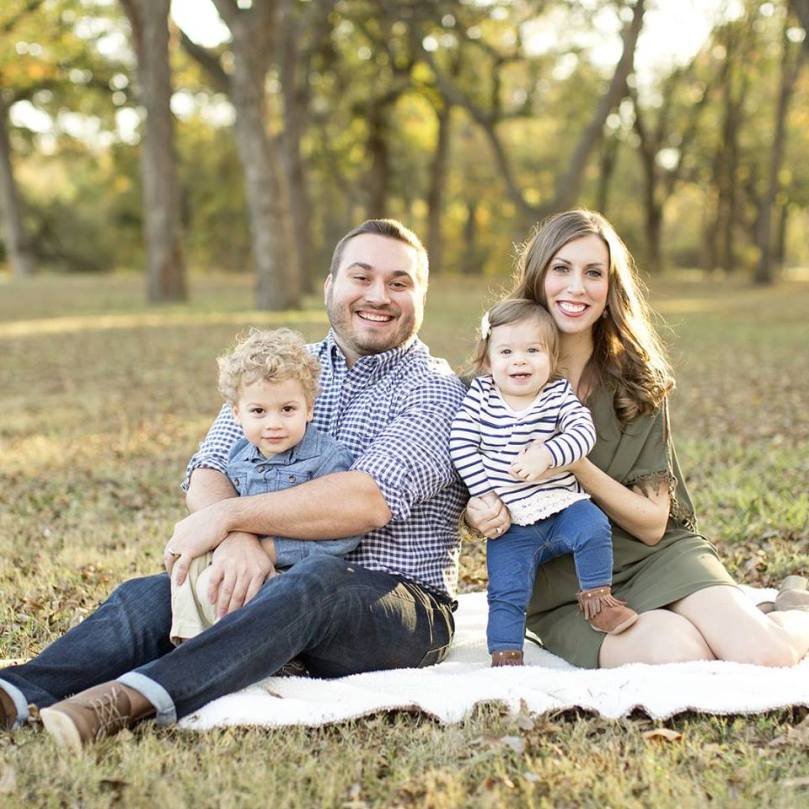
Lessons of Motherhood: The Little Life I Never Dreamed Of

The words to an old Switchfoot song have been playing through my head lately. “This is your life. Are you who you wanna be? This is your life. Is it everything you dreamed that it would be when the world was younger and you had everything to lose?” I think that song was out when I was in middle school or high school. I always liked it, but the words hit me differently now than they did then. I recently turned twenty-six. To my pessimistic self, that means I’m basically thirty, which means I’m basically old. Okay, I know I’m not really old, but I am older. My youth is passing away.

I remember when I went to college how big the world seemed, how full of endless possibility. I had dreams and visions for my life: who I was going to marry, where I was going to live, what I was going to do. I, of course, was going to do big, important things. By twenty-six I’d probably have gotten my Ph.D., written a best-selling book that changed the world, you know, those kind of things. I wanted to live my life for God, but I assumed that meant I had to live it loudly.

The funny thing about choices though is that they have a way of narrowing our lives and eliminating possibilities. I’ve made my choices. This is my life. I’m certainly not unhappy with it, but it is smaller than I expected. It mostly consists of the four walls of my home where I pass my days with my baby boy. I don’t have a Ph.D. I haven’t written a best-selling book. In fact, I haven’t done anything of much notoriety at all and perhaps I never will.

What I’ve been learning is that it is harder to be faithful in the mundane, to find the glory in the ordinary, and to follow God through the thickets of the everyday. It is more difficult to lay down your life in the small ways when no one is taking any particular notice. It is likely that few will remember me when I die. No one will chronicle my life with a biography, but my hope and prayer is that my son and any future children will be able to say that they learned grace and wisdom and integrity because I was their mother. I hope they will learn to love the word of God because I taught it to them. I pray that they will know Jesus because they knew me. I pray that I can be faithful with my little life and the little lives entrusted to me.

The Ordinariness of Extraordinary Love

“Unless it is mad, passionate, extraordinary love, it is a waste of time.”   I came across this quote on facebook recently and it sparked my interest.  In essence, if love is going to be anything, it certainly shouldn’t be ordinary.  If it’s real, true love, it won’t be boring. This certainly seems to reflect the general attitude of the culture currently.  We are told in movies and songs that love should be mad, passionate.  It should transform our lives from ordinary to extraordinary. Basically, love should be like a drug, something to keep us constantly high and something we cannot live without.

There’s a problem with this however.  The problem is that real love isn’t like that.  It isn’t like that at all.  Perhaps that’s why so many people end up disillusioned by what they thought was “true love.”  They find and latch on to something “passionate” and “extraordinary” only to soon find themselves extraordinarily disappointed and hurt when the passion fades.  They discover that what they thought was going to make their life special and meaningful has dropped them back into the harsh reality of their very normal, very ordinary lives.

That’s the heart of the problem.  We want to escape the mundane.  We’re so desperately afraid of it that we look to romantic love to save us from being ordinary, but the truth is that true, extraordinary love is incredibly ordinary.  Don’t get me wrong.  There is passion.  There are deep, heartfelt, thrilling emotions, but they are not the substance.  They are not the foundation. True love is extraordinary not because it lifts us above the ordinary, but because it perseveres with us through the ordinary.  And in life, there is a lot of ordinary.

My grandparents have been married for 61 years.  Their names are Jon and Dorothy.  They grew up and raised their family in the quiet state of Oklahoma.  They are normal people who worked normal jobs and led normal lives.  I can assure you that it has not been 61 years of madness and passion, but 61 years of faithfulness, of quiet commitment and deep companionship.  And when one of them leaves this earth, their love for each other will be celebrated as extraordinary not because they rode an endless roller coaster of thrills and emotions, but because they walked together, hand in hand, side by side through all of life’s highs, lows, and just plain average days.

The most crucial thing that our culture misses is that romantic love is just a picture.  Love that lasts for 61 years of marriage points us to Christ who shows us what love really is.  It does not promise to lift us above the ordinary, but to come dwell with us among it, transforming it into something beautiful and meaningful.  It came down to be born in a manger among manure and animals.  It walked the earth, knowing hunger and fatigue and getting dirt in its sandals.  It carried a heavy, heavy cross and died a humiliating death.  Christ put on human flesh, bore with us in the desperately ordinary things of life and persevered under the heavy load of our sin because of His great love for us. This is the real, extraordinary love for which our hearts long.   It “bears all things, hopes all things, endures all things” (1 Corinthians 13:7) and that is why it lasts and satisfies our souls.

Natural Does Not Make Moral

A moral philosophy has pervaded our culture that is (or should be) disturbing.  It comes to us dressed in what appear to be enlightened thought and words, but anyone who thinks even slightly deeply about it can see that it is the exact opposite.  It is in fact, hopelessly primitive. It is the philosophy which equates the natural with the moral.  If something is natural it cannot be prohibited and if we desire something, we must necessarily have a right to it.

This is no more noble than it is novel.  We, living in the post-modern age, tend to turn up our noses at those who came before, scoffing at their backward and binding sense of morality.  Indeed, we believe ourselves to have transcended and transformed what has come before us into something better when in reality, we have most decidedly descended, not into anything new or inspiring, but into the most base manner of thinking. In so doing, we make ourselves to be nothing more than creatures of instinct, indistinguishable from the animals.

There is indeed something very attractive about this line of thought and it is not hard to figure out what it is.  It is easy and it gets us exactly what we want.  Morality dictated by something other than our instincts is almost never convenient and rarely in line with our desires. Doing the right thing is, more often than not, very hard and very costly.

Of course, there is the glaring argument that if it isn’t right, then it would not be so ingrained in our nature to desire it.  We are, after all, “born this way.”  But what does that have to do with morality?  With truth?  Since when is “what is” the same thing as “what ought to be.” I find no necessary link between the two. In fact, I am more deeply convicted that there is much about what is, in the world and within myself, that really ought not to be.   I was born selfish, but does that mean that my selfishness must be condoned, even celebrated as good?  If all that counts is what comes naturally and what I desire, then anything, anything goes.  Let us think past the ends of our noses and realize that if we make natural instinct the sole basis of our morality, we have not merely revised moral law, we have abolished it.

We must be careful to remember that what has set humans apart from all other living beings is our sense of a moral law and our conviction that this law should govern nature and not the other way around. What has made the human experience beautiful and meaningful is our unique ability to perform very difficult and very costly moral acts: to die in the place of another, to remain faithful to our spouse until death, or to tell the truth at great cost.  These are the acts we celebrate and admire and yet they are anything but natural.  In fact, they go completely against nature.  They are, in the sense that they go beyond nature, supernatural. And it is this ability to think beyond and act in spite of our natural desires that makes us uniquely human and makes our humanness meaningful.