September 11th Reflections on God, Evil, and Psalm 10

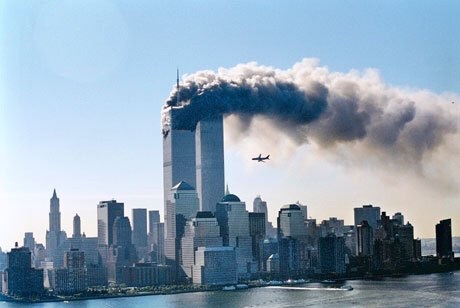
Today is September 11th, a day on which acts of unspeakable horror were committed and thousands of innocent people lost their lives.  As I imagine many people did today, I went back in my mind to that day of evil.  Where I was, what I was doing, and what I was thinking as I watched planes crash and buildings fall to the ground…Why?  It is a question we all ask at one time or another and I began thinking on it again today.  Why would God allow something like that to happen?  It is a serious and important question, one which has kept many from faith in God.

“Why O LORD, do you stand far off?  Why do you hide yourself in times of trouble?” Psalm 10:1

Not Just Why, but Who?

However, I think an equally important question is not just why, but who?  In the face of evil and suffering, it is easy to become angry at God or even decide that it must mean God is not really real.  I think though that we must be careful to first consider the direct cause of evil in the world: ourselves.  We cry against the wrongs committed against men, but it is to be noted that these wrongs are done at the hands of other men.  This tells us two very significant things about mankind: one, we hold ourselves to a higher standard than all other species and two, we continuously fall short of this standard.

In our outrage at evil, we deny God’s existence and yet, if God is not real and we are but products of the blind and indifferent process of evolution in a universe with no ultimate justice, then our outcry against evil is completely unfounded.  We are nothing but animals and so we should look to the animals for example.  We can no more object to the murder of innocents than we can to the predator who takes his prey.  Yet, we know this cannot really do.  We cannot really live like that because we know whether we are willing to admit it or not that we are different from the animal.  We are held to a higher standard.

It is this fact that we do not want to face because if there is a standard, there is a judge and that is a frightening thing.  For just as we know that we are held to this higher standard, we know that we have not met it. Looking at the history of mankind, it is evident that there is something terribly, terribly wrong with us, something rotten at our very core.  So we most certainly should ask why God would allow evil, but we should not forget that it is we who have committed it.  It originates with us.

The Wicked Man

If we are the direct perpetrators of evil, then the question of “Why?” must not only be levied at God, but at ourselves.  What is it that is so wrong with us?  Why would a man or men commit such heinous acts as murder or terrorism?  The Bible gives us an answer.  It tells us about the wicked man.

“In his arrogance the wicked man hunts down the weak, who are caught in the schemes he devises.  He boasts of the cravings of his heart; he blesses the greedy and reviles the LORD.  In his pride the wicked does not seek him; in all this thoughts there is no room for God….He says to himself, ‘God has forgotten; he covers his face and never sees'” (Psalm 10:2-4,11).  

The wicked man is wicked because he does not fear God.  In his pride, he believes that God does not see his evil acts nor that He will call him to account.  It is slightly ironic that in reaction to evil so many deny God and assume He does not see when it is the denial of God which has led men into evil in the first place. Evil has come into our hearts and our world because our hearts have turned from Him.

The Intellectual and Practical Answer of the Gospel

There still remains the question of, “Why, God?”  Intellectually, it is a question of logic.  How may a good and omnipotent God allow evil?  This is no easy question and I do not pretend to have it completely figured out, but I would say that I have come to peace with this question intellectually because the world would make less sense if there was no God.  If God is not real, then there is no higher standard and our objection to evil is unfounded.  We would not cry out as we do. And yet, we do. I find then that our objection to evil is stronger evidence for God rather than against.  I argue more extensively for this here: https://emilysuzanne11.wordpress.com/2013/04/04/how-can-a-good-god-be-compatible-with-evil-and-suffering/

Practically as well, the theist is in a better position than the atheist.  If there is no God, then not only do we have no grounds for calling evil acts evil, but we also have no hope of evil being punished and the wrongs committed against us being brought to right.  We may, in our anger against injustice, eliminate God from the picture, but in so doing, we throw away our only hope for justice.  Thus we are left without the ability to call evil evil and without any hope of triumph over it.

The Christian, however, knows evil for what it is, the outpouring of the hearts of wicked men who have hated God, and also knows how justice will be served, either through the wrath of God on us or through the wrath of God on Christ who took the evil of man upon Himself in his death and defeated it in His resurrection.

The Personal Answer of the Gospel 

Finally and most importantly, the Gospel provides a personal answer to evil because it is a personal problem.  We are both the perpetrators and victims of evil.  We are broken people.  It would not be enough if God only punished evil because we would still be left sick and bleeding.  We need not only justice, but salvation. Not only a judge and a victor, but someone to come to us in our suffering and bear our burdens with us. Jesus Christ is that person.

I remember while studying Philosophy in college, I went to hear the Christian philosopher Os Guiness speak on the problem of evil.  I was expecting an astoundingly insightful argument, something to blow me away.  When asked how a Christian comes to terms with evil and suffering, he smiled and said that you simply have enough faith in Jesus Christ.  I remember thinking, “That’s it?”  I felt slightly embarrassed in front of the atheists and agnostics in the room.  It seemed such a cliche and overly simplistic answer, but I realize now that it is anything but.

I have been married for a little over a year now.  I am not always with my husband so I do not always know what he is doing. Nor do I know what he is thinking all the time. He is very different from me so I do not always understand the things he does or why he does them, but I do know him.  I know his character.  I know his commitment to love and protect me.  I have experienced his love and faithfulness to me.  So I know that I can trust him even when I do not understand or agree with all that he does.  I believe that he will honor his commitment to love me and that he will be faithful to the vows he made to me. My faith in him is based on my experience of him.

It is the same with Jesus Christ.  I do not doubt God in the face of great evil in the world because I know Jesus Christ.  I know Him personally. Through the Gospel, He has made His heart and character known to us. He has shown His unfailing commitment to rescue us from the evil we have wrought with our own hands by taking it upon Himself.  As Os Guiness said, “Christianity is the only religion whose God bears the scars of evil.”  Jesus has shown Himself to be good and trustworthy and so we trust Him even when it does not always make sense.  More on this here:  https://emilysuzanne11.wordpress.com/2013/04/08/how-can-a-good-god-be-compatible-with-evil-and-suffering-part-2/

The answer to evil then is not just some argument, or something, but someone: the person of Jesus Christ who will both “judge the world in righteousness” (Psalm 9:8) and “be a refuge for the oppressed, a stronghold in times of trouble” (Psalm 9:9).  He both avenges the afflicted and enters into their affliction with them.   In this, the Gospel of Jesus Christ provides all that we need in the face of evil: a judge, a victor, and a healer.

“But you, O God, do see trouble and grief; you consider it to take it in hand.  The victim commits himself to you; you are the helper of the fatherless.  Break the arm of the wicked and evil man; call him to account for his wickedness that would not be found out.  The LORD is King for ever and ever; the nations will perish from his land. You hear, O LORD, the desire of the afflicted; you encourage them, and listen to their cry, defending the fatherless and the oppressed, in order that man, who is of the earth, may terrify no more” (Psalm 10:14-18).

The Right Kind of Slavery

A couple weeks ago I posted my thoughts about the question of whether or not living a life of holiness was necessarily opposed to living a life of pleasure.  I argued that contrary to common thought, the life of holiness will yield the life of greatest pleasure.  A closely related issue is the question of freedom.  What does it mean to be free?  Does living for God mean giving up your freedom?  These are important questions and I’d like to share what I’ve been mulling over lately.

First, we must examine what we think freedom is.  Then, we must determine if our view of freedom coheres with the reality of human nature and also whether, such freedom is possible or even desirable.

Freedom According to the World

America is by far the most individualistic society in the world.  We prize autonomy above all else.  The human right to liberty is the primary ideal on which the country was founded.  The founding fathers believed that humans had an inherent dignity which gave them certain rights and freedom which should never be violated.

However, I would say that freedom has come to mean something more today than it did then.  Personal liberty was never meant to be absolute.  The right notion of human dignity and liberty has been twisted into something it did not used to be, a bloated and irrational conception of freedom.

Today, our understanding of freedom has become the idea that we, as self-governing, rational individuals should have the right to do whatever we please, with whomever we please without any regard for consequences or accountability to an authority imposed on us against our will.  This kind of thinking has infiltrated our music, our media, basically ever aspect of our society.  The individual has been exalted to god-like status.   This is nothing new.  It is merely selfish arrogance masked as something noble, the age-old rebellion of man against God masquerading as “enlightenment” and “progress.”

Besides the fact that it is very hard to see how a society who has discarded the Creator who endowed them with such inalienable rights, can still maintain that they have such rights, there are other problems with this view.  It is not really possible nor, if we think about it for any length, is it really even desirable.

It would be very hard to maintain a society where people were actually free to do whatever they wanted.  There could be no laws.  There could be no protests against the behavior of others.  Chaos would reign.

Even if it was possible, would such a world even be one we would want to live in?  Of course not.  Our beliefs are inconsistent.  None of us really want a world of complete freedom.  We want the bad guys in prison.  We want those who have wronged us punished.  Our tolerance and subjectivity shatter in the face of evil.  Deep down, we do not want a world where there is absolute freedom and no final justice because we know that such a world would render our lives meaningless and neutralize our sufferings.  The real and ugly truth is that we do not want everyone to escape the consequences of their actions.  Just ourselves.

Moreover, I would argue doing as we please does not really bring freedom at all.  Those who seem the least concerned with following God’s law or any sense of moral obligation other than their own desires and whims usually end up in the greatest bondage to addictions and destructive lifestyles.

Freedom According to the Bible

So if doing as we please without regard for consequences is not true freedom, then what is?  The Bible takes a very different stance.  Its notion of human freedom is both less and more than ours for it exalts God rather than man. Man is not his own absolute authority.  His actions do have consequences and he will be held accountable, not to the moral code he creates for himself, but to the laws of an eternal, holy, just God.  None of us are free from God, but if we submit ourselves to God, we can be free from the destruction of own foolish ways.

Yes, we all have free will in the sense that we make our own choices and these choices come from our own hearts. Each human life is sacred and therefore should always be treated as an end and never merely as a means. However, our human dignity does not mean we are our own masters, exempt from God’s law and immune to His judgments.  We were simply not designed to be our own master and therefore any attempt to be will end in disaster and frustration. It goes against our nature.  The truth is that we are all slaves to something.  We were created to worship and whatever we worship, we serve. Whatever bewitches our hearts will own our souls.  We are in bondage to whatever we love most.

This is startling and offensive to our American sensibilities, but if we survey even a little of human history or look into our own hearts, we cannot deny it.  Yes, we are free to make our own choices in this life, but the sum of our choices is merely the choice of what we will be slaves to, what master we will serve.  In fact, the Bible only gives us two options.  We can either be slaves to sin or we can be slaves to righteousness (Romans 6:18-23).

To be a slave to sin is to live without reference to God.  It is to “exchange the truth of God for a lie, and worship and serve created things, rather than the Creator” (Romans 1:25).  The problem with this kind of slavery is that it is in direct opposition with reality and in total opposition to our built-in purpose to be God-worshipers and God-reflectors.  In essence, to reject God’s law in order to live a life of licentious freedom is to live a lie. Absolute freedom without the guide of absolute truth is a dangerous thing.  To freely follow our own passions and desires is not freedom from God but voluntary bondage to the objects of our own misplaced love and worship.  Many who live for such “freedom” ultimately find it to be a cruel master.

If being a slave to sin is to live a lie, then being a slave to righteousness is to live in the light of the truth of God. It is to make our choices in accordance with the reality of God’s existence, the truth about who He is as the Creator, and the subsequent truth about who we are as the created.  As Tim Keller put it, freedom “is not the absence of limitations and constraints but it is finding the right ones, those that fit our nature and liberate us.” -Tim Keller, The Reason for God

Freedom then, on the Biblical account, is nothing more than choosing the right kind of slavery.  Now to us, slavery has major negative connotations which we need to check at the door.  Choosing the right kind of slavery merely means to serve the God we were made to serve and worship the God we were created to worship.  It means exalting God rather than ourselves.  In so doing, we find that, paradoxically, such slavery leads to freedom because it releases us to fulfill the purpose for which we were designed and thus, to attain the abundant life which God always intended for us.

No, we are not “free” to do whatever we like.  We are still bound to the authority of God, but we are no longer bound to sin and therefore, death (Romans 6:21).  We are now bound to Christ and therefore, life (Romans 6:22). We are bound to a God of infinite love and wisdom “who did not spare his own Son, but gave him up for us all” (Romans 8:31) and “who works all things for good for those who love him” (Romans 8:28).  What better Master to serve?  Who could be more worthy of our utmost love and devotion?

Jesus said, “if you hold to my teaching, you are really my disciples. Then you will know the truth, and the truth will set you free” (John 8:31-32).  The precondition for freedom is truth and the precondition for truth is holding to His teaching and thus, being His disciples.  The life of true freedom then is not the life of freedom from the authority of God, but the life submitted to the authority of God.  Christ is the only One we were meant to worship and the only Master who will free us from death unto life eternal.

Truth is Not Free

“Buy the truth and do not sell it; get wisdom, discipline and understanding.”  -Proverbs 23:23

“Wisdom is supreme; therefore get wisdom.  Though it cost all you have, get understanding.” -Proverbs 4:7

My last post was a piece about the supposed virtue of an “open mind.”  As it said, an open mind is a commendable thing only if we recognize truth as truth and subsequently, submit to it and invest in it.  As that implies and the above verses explicate, this means that the truth will cost us something.  If we really want to own it, to live by it, we must be willing to be obedient to it and yes, even pay a price for it.  Truth is not free.

This should be sobering to us.  Yet it should also be a hopeful thing.  For by virtue of costing something, it must also be worth something.  We do not pay a price for things of no value to us.  And these verses tell us that the treasures of truth and wisdom are of supreme value.  

Jesus has told us that He is the Way, the Truth, and the Life.  He has also told us that anyone who would come after Him, the Truth embodied, must be willing to lose their life.  The truth is not always popular.  It is not always easy.  But I do know this:  the truth is always good and the truth will always win.  When all is said and done, I want to be on the side of truth.  For the promise of Scripture is that while it is certain that following Christ will cost us something, it is even more certain that it will be worth everything.


God is Always Watching. Good or Bad?

I recently stumbled across a video on Youtube that piqued my interest.  In the video, there was a panel discussion between four known Christians and Christopher Hitchens, a well-known atheist.  I can’t remember who all of the Christians were, but among them were William Laine Craig and Lee Strobel, published apologeticists (is that the right word? haha).   I must say, poor Mr. Hitchens, was considerably outnumbered, but this didn’t seem to trouble him at all.

I knew Hitchens to be one of the “new atheists,” but hadn’t ever heard him speak.  I am pleased to say I found him to be much more calm and rational than I expected.  Despite the fact, that I totally disagree with his atheism, it is always pleasing to find that you can have intelligent and generally friendly debate.  He had several objections to Christianity, many of which were reasonable objections that Christians can and must answer.

However, it was more his underlying or implied objections that I found particularly intriguing.  After watching the video, I chewed on the things Hitchens had said.  One of the main reasons he objected to God’s existence was because God was always watching.  He said this invaded our right to privacy.  This seemed to me to be a very weak and petty objection.  Just because God is always watching doesn’t mean He doesn’t exist.  What I think Hitchens was really saying is that He didn’t like that God was always there and always watching what everyone was doing.

It is in this, that Hitchens gives himself away, as most atheists do.  He betrays the real reason that he doesn’t believe in God.  The real reason is that he doesn’t like God.  He doesn’t like that He’s there and that He’s watching.  But why?  I was struck by how Hitchens and I could have such different reactions to the fact that God sees everything.  For him, this was a terrible thing, terrible enough for him to willfully deny that God was there at all.   Are his feelings merited?  I think to some extent, they are, though denying that God is real is hardly an appropriate solution.

Indeed, God is omnipresent and omniscient.  He sustains the world from day to day and a sparrow does not fall to the earth without His knowledge.  There is nothing He does not see, nothing He does not know.  This truth will either inspire in us great fear or great hope, fear if we are not in Christ and hope if we are.

I must say Mr. Hitchens, you are partially wise to recoil at God’s “all seeing eye”, but the truth is that you should be much more afraid than you are.  God is watching and this is, indeed, a terrible, fearful thing.  However, trying to wish Him away will not help.  Whether we believe in Him or not, “they eyes of the LORD are everywhere, keeping watch on the wicked and the good.” -Proverbs 15:3  “His eyes are on the ways of men; He sees their every step.  There is no dark place, no deep shadow where evildoers can hide.” -Job 34:21:22  Nevertheless, many of us still try.

The other day, the little boy of the family I babysit came home from kindergarten.  Upon getting home from school, he quickly ripped open his backpack, opened his folder, took out a green slip and ran to the trash can to dispose of it, all right in front of me.  I was, of course, suspicious and fished the note out of the trash and surely enough, it contained a report from his teacher that he had been misbehaving at school.  Obviously, he was trying to hide the evidence so he could escape the displeasure and discipline of his parents.  Needless to say though, he needs to work on his sneakiness.

While this was amusing, it is revealing of our human nature.  It struck me that we are often much like him, foolish enough to think we can hide our misdeeds from the God who sees all.  Or, more foolishly and also, arrogantly, we suppose that He doesn’t see, saying with the wicked of Psalm 73, “How can God know?  Does the Most High have knowledge?” -Psalm 73:11  But the truth is that He does see and He will deliver judgment upon our misdeeds on this earth.  “Nothing in all creation is hidden from God’s sight.  Everything is uncovered and laid bare before the eyes of him to whom we must give account.” -Hebrews 4:13  This is a sobering and fearful truth.  Whether or not we acknowledge His existence, He is there and He will judge.  If we are not in Christ, we will receive the just penalty for our sins: the wrath of God.

However, if we are in Christ, the reality of God seeing and knowing everything is transformed from a dreadful reality, to a precious one.    God is ever watching us, but with a gaze of love and not of judgment.  I delight in the truth that God sees me.  I rejoice that “He guards the course of the just and protects the way of His faithful ones.” -Proverbs 2:8  I hope in the reality that His eyes see all and “range throughout the earth to strengthen those whose hearts are fully committed to Him.” -2 chronicles 16:9  I do not fret over the trials and injustice of this world, because I know that “the foundations of the earth are the LORD’s; upon them He has set the world.  He will guard the feet of His saints.” -1 Samuel 2:9  Because I trust in Him, because I love Him and am called according to His purpose, I know that He will watch over my every step and ensure that all will work for my good.

It is important to note that this is not a truth that should feed our pride, but rather, our humility.  The only reason we can delight in God’s omniscience is not because we have done such righteous deeds.  This is not a delineation between the wicked and the righteous based on their deeds, but based on their hope in Christ.   We see in Psalm 37 that the difference between the wicked and the righteous is that the righteous put their hope in God and take refuge in Him.  “The salvation of the righteous comes from the LORD; He is their stronghold in time of trouble. The LORD delivers them from the wicked and saves them, because they take refuge in Him.” -Psalm 37:39-40  Were it not for the cross, we should be just as terrified as the wicked because we would still be the wicked, but because of God’s grace to us in Christ, we who put our hope in Him find salvation from our sins and delight in God’s oversight of our lives.  

So, if we are in Christ, let us celebrate that God watches over our every step. We know that with His own sovereign hands, He has planted the seed of our faith in the soil of His grace and salvation, given us in the death and resurrection of Christ.  He will watch over it with care, tending it with the nourishment of His promises, protecting it from threat and harm that it may grow into completion and receive all that has been hoped for. If we experience trials or injustice while we tarry on this earth, we shall not despair for we know that He sees and His gaze is not a passive one.  He is not indifferent to our struggles for as His children, we are called by His name, and He will always bring glory to His name.  He watches over us, eager to do us good and to supply all our needs.    Let us then, find hope and strength, knowing that He knows our course and will graciously give us all things in order to persevere, to run the race marked out for us until one day, our faith will be our sight and we shall see Him, the God who sees us, face to face.