September 11th Reflections on God, Evil, and Psalm 10

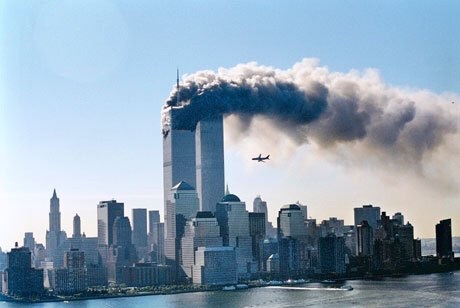
Today is September 11th, a day on which acts of unspeakable horror were committed and thousands of innocent people lost their lives.  As I imagine many people did today, I went back in my mind to that day of evil.  Where I was, what I was doing, and what I was thinking as I watched planes crash and buildings fall to the ground…Why?  It is a question we all ask at one time or another and I began thinking on it again today.  Why would God allow something like that to happen?  It is a serious and important question, one which has kept many from faith in God.

“Why O LORD, do you stand far off?  Why do you hide yourself in times of trouble?” Psalm 10:1

Not Just Why, but Who?

However, I think an equally important question is not just why, but who?  In the face of evil and suffering, it is easy to become angry at God or even decide that it must mean God is not really real.  I think though that we must be careful to first consider the direct cause of evil in the world: ourselves.  We cry against the wrongs committed against men, but it is to be noted that these wrongs are done at the hands of other men.  This tells us two very significant things about mankind: one, we hold ourselves to a higher standard than all other species and two, we continuously fall short of this standard.

In our outrage at evil, we deny God’s existence and yet, if God is not real and we are but products of the blind and indifferent process of evolution in a universe with no ultimate justice, then our outcry against evil is completely unfounded.  We are nothing but animals and so we should look to the animals for example.  We can no more object to the murder of innocents than we can to the predator who takes his prey.  Yet, we know this cannot really do.  We cannot really live like that because we know whether we are willing to admit it or not that we are different from the animal.  We are held to a higher standard.

It is this fact that we do not want to face because if there is a standard, there is a judge and that is a frightening thing.  For just as we know that we are held to this higher standard, we know that we have not met it. Looking at the history of mankind, it is evident that there is something terribly, terribly wrong with us, something rotten at our very core.  So we most certainly should ask why God would allow evil, but we should not forget that it is we who have committed it.  It originates with us.

The Wicked Man

If we are the direct perpetrators of evil, then the question of “Why?” must not only be levied at God, but at ourselves.  What is it that is so wrong with us?  Why would a man or men commit such heinous acts as murder or terrorism?  The Bible gives us an answer.  It tells us about the wicked man.

“In his arrogance the wicked man hunts down the weak, who are caught in the schemes he devises.  He boasts of the cravings of his heart; he blesses the greedy and reviles the LORD.  In his pride the wicked does not seek him; in all this thoughts there is no room for God….He says to himself, ‘God has forgotten; he covers his face and never sees'” (Psalm 10:2-4,11).  

The wicked man is wicked because he does not fear God.  In his pride, he believes that God does not see his evil acts nor that He will call him to account.  It is slightly ironic that in reaction to evil so many deny God and assume He does not see when it is the denial of God which has led men into evil in the first place. Evil has come into our hearts and our world because our hearts have turned from Him.

The Intellectual and Practical Answer of the Gospel

There still remains the question of, “Why, God?”  Intellectually, it is a question of logic.  How may a good and omnipotent God allow evil?  This is no easy question and I do not pretend to have it completely figured out, but I would say that I have come to peace with this question intellectually because the world would make less sense if there was no God.  If God is not real, then there is no higher standard and our objection to evil is unfounded.  We would not cry out as we do. And yet, we do. I find then that our objection to evil is stronger evidence for God rather than against.  I argue more extensively for this here: https://emilysuzanne11.wordpress.com/2013/04/04/how-can-a-good-god-be-compatible-with-evil-and-suffering/

Practically as well, the theist is in a better position than the atheist.  If there is no God, then not only do we have no grounds for calling evil acts evil, but we also have no hope of evil being punished and the wrongs committed against us being brought to right.  We may, in our anger against injustice, eliminate God from the picture, but in so doing, we throw away our only hope for justice.  Thus we are left without the ability to call evil evil and without any hope of triumph over it.

The Christian, however, knows evil for what it is, the outpouring of the hearts of wicked men who have hated God, and also knows how justice will be served, either through the wrath of God on us or through the wrath of God on Christ who took the evil of man upon Himself in his death and defeated it in His resurrection.

The Personal Answer of the Gospel 

Finally and most importantly, the Gospel provides a personal answer to evil because it is a personal problem.  We are both the perpetrators and victims of evil.  We are broken people.  It would not be enough if God only punished evil because we would still be left sick and bleeding.  We need not only justice, but salvation. Not only a judge and a victor, but someone to come to us in our suffering and bear our burdens with us. Jesus Christ is that person.

I remember while studying Philosophy in college, I went to hear the Christian philosopher Os Guiness speak on the problem of evil.  I was expecting an astoundingly insightful argument, something to blow me away.  When asked how a Christian comes to terms with evil and suffering, he smiled and said that you simply have enough faith in Jesus Christ.  I remember thinking, “That’s it?”  I felt slightly embarrassed in front of the atheists and agnostics in the room.  It seemed such a cliche and overly simplistic answer, but I realize now that it is anything but.

I have been married for a little over a year now.  I am not always with my husband so I do not always know what he is doing. Nor do I know what he is thinking all the time. He is very different from me so I do not always understand the things he does or why he does them, but I do know him.  I know his character.  I know his commitment to love and protect me.  I have experienced his love and faithfulness to me.  So I know that I can trust him even when I do not understand or agree with all that he does.  I believe that he will honor his commitment to love me and that he will be faithful to the vows he made to me. My faith in him is based on my experience of him.

It is the same with Jesus Christ.  I do not doubt God in the face of great evil in the world because I know Jesus Christ.  I know Him personally. Through the Gospel, He has made His heart and character known to us. He has shown His unfailing commitment to rescue us from the evil we have wrought with our own hands by taking it upon Himself.  As Os Guiness said, “Christianity is the only religion whose God bears the scars of evil.”  Jesus has shown Himself to be good and trustworthy and so we trust Him even when it does not always make sense.  More on this here:  https://emilysuzanne11.wordpress.com/2013/04/08/how-can-a-good-god-be-compatible-with-evil-and-suffering-part-2/

The answer to evil then is not just some argument, or something, but someone: the person of Jesus Christ who will both “judge the world in righteousness” (Psalm 9:8) and “be a refuge for the oppressed, a stronghold in times of trouble” (Psalm 9:9).  He both avenges the afflicted and enters into their affliction with them.   In this, the Gospel of Jesus Christ provides all that we need in the face of evil: a judge, a victor, and a healer.

“But you, O God, do see trouble and grief; you consider it to take it in hand.  The victim commits himself to you; you are the helper of the fatherless.  Break the arm of the wicked and evil man; call him to account for his wickedness that would not be found out.  The LORD is King for ever and ever; the nations will perish from his land. You hear, O LORD, the desire of the afflicted; you encourage them, and listen to their cry, defending the fatherless and the oppressed, in order that man, who is of the earth, may terrify no more” (Psalm 10:14-18).

The Right Kind of Slavery

A couple weeks ago I posted my thoughts about the question of whether or not living a life of holiness was necessarily opposed to living a life of pleasure.  I argued that contrary to common thought, the life of holiness will yield the life of greatest pleasure.  A closely related issue is the question of freedom.  What does it mean to be free?  Does living for God mean giving up your freedom?  These are important questions and I’d like to share what I’ve been mulling over lately.

First, we must examine what we think freedom is.  Then, we must determine if our view of freedom coheres with the reality of human nature and also whether, such freedom is possible or even desirable.

Freedom According to the World

America is by far the most individualistic society in the world.  We prize autonomy above all else.  The human right to liberty is the primary ideal on which the country was founded.  The founding fathers believed that humans had an inherent dignity which gave them certain rights and freedom which should never be violated.

However, I would say that freedom has come to mean something more today than it did then.  Personal liberty was never meant to be absolute.  The right notion of human dignity and liberty has been twisted into something it did not used to be, a bloated and irrational conception of freedom.

Today, our understanding of freedom has become the idea that we, as self-governing, rational individuals should have the right to do whatever we please, with whomever we please without any regard for consequences or accountability to an authority imposed on us against our will.  This kind of thinking has infiltrated our music, our media, basically ever aspect of our society.  The individual has been exalted to god-like status.   This is nothing new.  It is merely selfish arrogance masked as something noble, the age-old rebellion of man against God masquerading as “enlightenment” and “progress.”

Besides the fact that it is very hard to see how a society who has discarded the Creator who endowed them with such inalienable rights, can still maintain that they have such rights, there are other problems with this view.  It is not really possible nor, if we think about it for any length, is it really even desirable.

It would be very hard to maintain a society where people were actually free to do whatever they wanted.  There could be no laws.  There could be no protests against the behavior of others.  Chaos would reign.

Even if it was possible, would such a world even be one we would want to live in?  Of course not.  Our beliefs are inconsistent.  None of us really want a world of complete freedom.  We want the bad guys in prison.  We want those who have wronged us punished.  Our tolerance and subjectivity shatter in the face of evil.  Deep down, we do not want a world where there is absolute freedom and no final justice because we know that such a world would render our lives meaningless and neutralize our sufferings.  The real and ugly truth is that we do not want everyone to escape the consequences of their actions.  Just ourselves.

Moreover, I would argue doing as we please does not really bring freedom at all.  Those who seem the least concerned with following God’s law or any sense of moral obligation other than their own desires and whims usually end up in the greatest bondage to addictions and destructive lifestyles.

Freedom According to the Bible

So if doing as we please without regard for consequences is not true freedom, then what is?  The Bible takes a very different stance.  Its notion of human freedom is both less and more than ours for it exalts God rather than man. Man is not his own absolute authority.  His actions do have consequences and he will be held accountable, not to the moral code he creates for himself, but to the laws of an eternal, holy, just God.  None of us are free from God, but if we submit ourselves to God, we can be free from the destruction of own foolish ways.

Yes, we all have free will in the sense that we make our own choices and these choices come from our own hearts. Each human life is sacred and therefore should always be treated as an end and never merely as a means. However, our human dignity does not mean we are our own masters, exempt from God’s law and immune to His judgments.  We were simply not designed to be our own master and therefore any attempt to be will end in disaster and frustration. It goes against our nature.  The truth is that we are all slaves to something.  We were created to worship and whatever we worship, we serve. Whatever bewitches our hearts will own our souls.  We are in bondage to whatever we love most.

This is startling and offensive to our American sensibilities, but if we survey even a little of human history or look into our own hearts, we cannot deny it.  Yes, we are free to make our own choices in this life, but the sum of our choices is merely the choice of what we will be slaves to, what master we will serve.  In fact, the Bible only gives us two options.  We can either be slaves to sin or we can be slaves to righteousness (Romans 6:18-23).

To be a slave to sin is to live without reference to God.  It is to “exchange the truth of God for a lie, and worship and serve created things, rather than the Creator” (Romans 1:25).  The problem with this kind of slavery is that it is in direct opposition with reality and in total opposition to our built-in purpose to be God-worshipers and God-reflectors.  In essence, to reject God’s law in order to live a life of licentious freedom is to live a lie. Absolute freedom without the guide of absolute truth is a dangerous thing.  To freely follow our own passions and desires is not freedom from God but voluntary bondage to the objects of our own misplaced love and worship.  Many who live for such “freedom” ultimately find it to be a cruel master.

If being a slave to sin is to live a lie, then being a slave to righteousness is to live in the light of the truth of God. It is to make our choices in accordance with the reality of God’s existence, the truth about who He is as the Creator, and the subsequent truth about who we are as the created.  As Tim Keller put it, freedom “is not the absence of limitations and constraints but it is finding the right ones, those that fit our nature and liberate us.” -Tim Keller, The Reason for God

Freedom then, on the Biblical account, is nothing more than choosing the right kind of slavery.  Now to us, slavery has major negative connotations which we need to check at the door.  Choosing the right kind of slavery merely means to serve the God we were made to serve and worship the God we were created to worship.  It means exalting God rather than ourselves.  In so doing, we find that, paradoxically, such slavery leads to freedom because it releases us to fulfill the purpose for which we were designed and thus, to attain the abundant life which God always intended for us.

No, we are not “free” to do whatever we like.  We are still bound to the authority of God, but we are no longer bound to sin and therefore, death (Romans 6:21).  We are now bound to Christ and therefore, life (Romans 6:22). We are bound to a God of infinite love and wisdom “who did not spare his own Son, but gave him up for us all” (Romans 8:31) and “who works all things for good for those who love him” (Romans 8:28).  What better Master to serve?  Who could be more worthy of our utmost love and devotion?

Jesus said, “if you hold to my teaching, you are really my disciples. Then you will know the truth, and the truth will set you free” (John 8:31-32).  The precondition for freedom is truth and the precondition for truth is holding to His teaching and thus, being His disciples.  The life of true freedom then is not the life of freedom from the authority of God, but the life submitted to the authority of God.  Christ is the only One we were meant to worship and the only Master who will free us from death unto life eternal.

Praise for the God of Isaiah 40

This morning in my devotions I read Isaiah 40.  Isaiah has always been one of my favorite books and I think Isaiah 40 has to be one of my favorite chapters in the whole Bible.  It is a wonderful and striking picture of a God who is both mighty and gentle. That is why I love this chapter. It illustrates both the transcendence and immanence of our God.  Both of these attributes are worthy of praise, but it is the combination of the two that is really amazing.

Isaiah 40 tells us of the might and power of a God who is sovereign over His creation.  “See the Sovereign LORD comes with power, and his arm rules for him” (Isaiah 40:10).  We are given pictures of Him measuring the waters in His hand and weighing the dust of the earth in a basket (Isaiah 40:12).  We are told that “He sits enthroned above the circle of the earth, and its people are like grasshoppers.  He stretches out the heavens like a canopy, and spreads them out like a tent to live in” (Isaiah 40:22)

These pictures of God certainly put me in awe of Him.  I stand amazed at a God who is so beyond me.  However, I think if all we knew of God was the He was mighty, sovereign, and transcendent, we would no doubt fear Him and honor Him, but I am not sure we would love Him or trust Him.  A God who is merely transcendent is great, but He is not personal.  He may have no reason to care for the worries and woes of the weak and finite creatures of the earth.

Yet Isaiah 40 tells us that our God is both transcendent and immanent. He is both far beyond us and yet ever near us.  With the same arm that rules with power, “He tends his flock like a shepherd: He gathers the lambs in his arms and carries them close to his heart” (Isaiah 40:11).  The God who sits enthroned over all the earth, who does not grow tired or weary, comes near to us in our weakness so that He may “give strength to the weary and increase the power of the weak” (Isaiah 40:29).  Just as He calls out the starry host by name (Isaiah 40:26) , so He also calls out His children by name and reminds them that He will be with them and protect them through every trial and struggle (Isaiah 43:1).

I treasure the truth of my God’s transcendence and His immanence.  If He were only transcendent, I would fear Him, but not know Him.  If he were only immanent and not transcendent, He would care for me, but not be able to work good for me through His sovereign power.  Yet He is both, both sovereign over all and yet a very present help in times of trouble.  He is both full of might and power and also full of love and gentleness toward the sheep of His pasture.  What a glorious God we serve, who is both able and willing to meet us and provide for us in our weakness and need.

In Christ, we see find the greatest portrayal of this wondrous truth.  It is simply astounding that the transcendent God who knows nothing of weakness or need should condescend so far as to come down to be Immanuel, God With Us, with us in our frailty, our weakness, and our desperate need for salvation.  Could we ask for a greater Shepherd than the One who, in love, came to dwell among us and lay down His life for us and who, in sovereignty and power, rose to life in defeat over death and sin?  Surely this God who is beyond us in wisdom and strength is to be ever praised and surely this God who is for us and near us with love and grace is to be ever trusted.

Reasonable Faith

     To say that we have a reasonable faith might seem strange.  I think when we hear the word “faith,” we think of blind belief, high hopes without much grounding. Whatever faith is, it is certainly not based on reason.  This is true to an extent.  We are saved through faith and this faith is based on the revelation of God.  None of us could arrive at belief in God through reason because apart from God’s work and revelation of truth, our thinking is futile and our hearts are darkened.  However, I would argue that once God has revealed Himself to us, the playing out of our faith, that is faith for every day life, is really very reasonable.

     What I have come to love and appreciate about Scripture is that it is full of valid and sound deductive arguments.  The writers of Scripture reasoned out their faith.  

“The LORD is my light and my salvation–whom shall I fear?  The LORD is the stronghold of my life–of whom shall I be afraid?” Psalm 27:1.

      King David knew that if God was His stronghold, he had nothing to fear.  Man could certainly do nothing to him.  

“And why do you worry about clothes?  See how the lilies of the field grow.  They do not labor or spin.  Yet I tell you that not even Solomon in all his splendor was dressed like one of these.  If that is how God clothes the grass of the field, which is here today and tomorrow is thrown into the fire, will he not much more clothe you, O you of little faith?”  Matthew 6:28-30

     Matthew posed this deductive argument that if we believe that God provides for insignificant things such as flowers, we must also surely believe He will provide for us, His children.  If God knows our needs and is able and faithful to provide, then worry is nonsensical.  To use terms of logic, worry “does not follow” from what we know to be true about God.  Faith in God is actually the logical choice.  

“If God is for us, who can be against us?  He who did not spare His own Son, but gave him up for us all–how will he not also, along with him, graciously give us all things?”  Romans 8:31-32  

     Paul eloquently and persuasively reasoned that if God is with us, no one could possibly stand against us.  If God loved us enough to die for us, then there is nothing good which He would withhold from us.  If the magnitude of our sin could not separate us from His love, then nothing else possibly could.  It is simple logic.  

    These are just a few examples of this kind of deductive reasoning in Scripture. They all have something in common.  In logic, it’s called a conditional statement.  It’s quite simple.  If A, then B.  If A obtains, then it follows that B will necessarily obtain.  I would suggest that Scripture is in a way, one big conditional statement beginning with the clause “If God, then…” with all manner of things logically following from that.  

     I have found that when I lack faith in God, I am actually being incredibly unreasonable.  I am not believing God is who He says He is despite manifold evidence to the contrary. God has revealed Himself to me.  He has shown me that He is sovereign and omnipotent, that He is good and faithful.  On the cross, He demonstrated the depth of His love for me, His unshakeable commitment to always do me good.  In His Word, He promises to provide for me, sustain me, protect me, refine me, empower me and so much more.  And because I am in Christ, all these promises to me are ‘Yes’ and ‘Amen.’ (2 Corinthians 1:20).  

     So if I worry, if I doubt God, it is not so much that I lack faith, but that I have foolishly put my faith in the wrong things.  It is a question of what I really believe to be true about God.  Do I believe more in the power of my circumstances than in the power of my God?  Do I have more faith in my paycheck than the God who owns the cattle on a thousand hillsides?  Do I put greater stock in the lies of the world and the deceitful whispers of the enemy than the words and promises of the God who laid down His very life for me?  

     If God….If GOD, in all His sovereignty, wisdom, power, love and grace, if He is real then how can I worry?  How can I doubt?  How can I not believe that He can do amazing, miraculous things?  If I don’t, I have not followed my faith in God to its logical conclusions.  For we who walk by faith are not those who defy reason.  We embrace it to its fullest, putting all of our hope, all of our trust into this one rock-solid, infinitely powerful belief, “If God, then….”  We know by faith that God exists, that He is all good and He is all powerful.  From this we must now deduce all the wonderful things that follow.  If we need, He will provide.  If He has said it, He will do it.  If God is all that He has shown Himself to be, then there is nothing good which shall be withheld from us, nothing which we shall fear, and nothing which shall be impossible.  This is our faith and it is reasonable.  

From Our Hands to His

Our hands say a lot about what we really believe, what’s really in our hearts. If our heart soars and feels as if it would burst with awe and wonder at a glimpse of the glory of God, we lift our hands in praise. If we love as He has loved us and comfort as we ourselves have been comforted, we reach our hands out to others to give, to lift up, to lead, to help. If we come to the end of ourselves and are humbled by the realization of our own weakness, we unashamedly open our hands to receive from others. If we have purpose and seek to glorify Him, we put our hands to work, to labor and strive for excellence at whatever He has laid before us. If we rely on the wisdom of God and seek His will, we clasp our hands in prayer. If we trust in God and live in surrender to Him, we lay our hands open before Him, ready to receive that which He gives and surrender that which He takes. If God is our LORD, our hands cling desperately to His, firmly grasping so that He might lead us. 

The hands of God lead us, discipline us, break us, mold us. They command the universe and yet, they bled for us.They carry us when we’re weak and when we’re weary. They wipe away our tears when we cry and they heal us when we’re wounded.   He holds each of us in His hands and His hands….His hands are sure. Let us surrender our lives…from our hands to His.

Thoughts on Life and Death. Sobering Yet Hopeful.

*This is a piece I wrote a couple years back after the death of my Grandmother.

“It is better to go to a house of mourning than to go to a house of feasting, for death is the destiny of every man; the living should take this to heart. Sorrow is better than laughter because a sad face is good for the heart.” -Ecclesiastes 7:2-3

I would dare anyone to visit a nursing home and walk away prideful. They are halls of death, corridors where people come to await their final breath. The names on the doors represent lives…Jane…Norman…decades of life, no doubt, but what does it matter now? They are but shells of their former selves. Perhaps they used to run, but now they cannot even stand. Perhaps they once did great things, but now they cannot even eat without great effort. My heart and mind are sobered and I am taught.

As I pass through these halls, I know that all roads lead here. Whether our lives are marked by wealth, poverty, the extraordinary, or the ordinary, they all converge to this spot, to this door of death. How little we think about it and what a tragedy that is, for it is the destiny of us all and when we arrive, so many of us find that we have been deceived. All those comforts and achievements we fought for have betrayed us. We are left alone with nothing but the sound of the machines and a thin gown. We find that even our bodies have lied to us. We are not strong, for we cannot even sit up. We are not beautiful, for our flesh is deteriorating. We are not smart, for our minds have abandoned us to a dim fog.

These truths must be pondered in life to prepare for death. If we do, we find wisdom. We learn that “the world and its desires shall pass away, but the man who does the will of God will live forever.” I John 2:17 And there is One in whom we can hope and trust who will not deceive us or desert us, but draws near to us as we draw near to Him. We must choose Him over the things of this world so that when we meet our common destiny, our hope does not vanish like the finals rays of day, but rather, grows ever brighter like the coming dawn.

Then we will not be surprised or hurt by the desertion of the things of this world, for we did not cling to them in the first place. The simple truth is that we will all die. We will all be humbled and brought low, but it is our choice of how and when. We can ignore this truth and reality and have all that we cling to ripped from our hands, leaving us alone and afraid in our final moments, or we can embrace wisdom. We can release our false hopes now, humble ourselves now, cling to Jesus now, and so someday, meet death not as a thief of all we hold dear, but as a giver of what we have hoped for, but not seen, the fulfillment of our faith.

I have been reflecting on what a strange thing it is for us to say that someone died, as if they did it on purpose, took some kind of action. In truth, living and dying are such passive acts that we have no say in. We do not choose to be born, nor do we choose to die. Our hearts beat. We inhale. We exhale. But there is nothing purposeful in that, nor is there anything purposeful in ceasing to do so.

Yet, it occurs to me that there is a paradox here, a reality that so few come to face. In order to have any kind of purpose, we must live to die and die to live. Of course, it is more than the physical living and dying that we cannot escape even if we should wish it. But no, in living to die and dying to live, we focus our hearts, our minds, and our bodies on putting to death our false and transitory hopes, on considering all our profit and gain as loss for the sake of Christ. And Christ is our model. He himself came to this earth and lived to die, but He knew the Father’s promise. “He poured out his life unto death,” Isaiah 53:12knowing that “after the suffering of His soul, He would see the light of life, and be satisfied” Isaiah 53:11

So, we must follow in His footsteps. For His sake, “we face death all day long; we are considered as sheep to be slaughtered” Romans 8:36 We die to ourselves and this world deliberately, purposefully so that we might live and live just as deliberately and purposefully as we have died. In so doing, we gain the censure of the world and are counted as fools. “Yet I am not ashamed, because I know whom I have believed, and am convinced that he is able to guard what I have entrusted to him for that day.” 2 Timothy 1:12 And I now find that the wisdom of this truth has never been more clearly authenticated. I perceive it and lay hold of it and exhort you to do the same. If we do, we live it out. We “give what we cannot keep to gain what we cannot lose.” And we are no fools.

But what of those left behind? What balm do we find for the sorrow of our souls? What ointment to assuage the sting of loss? It is nothing of this world, for we have seen how fleeting it is. Indeed, the constant change and deterioration of this world, the sifting of its shores teach us not to build here, but to build upon His future promises. We must be like Abraham, and by faith, look “forward to the city with foundations, whose architect and builder is God.”Hebrews 11:10 The pain of this world, teaches us to distrust it and admit that we are“aliens and strangers on earth. People who say such things show that they are looking for a country of their own”….for we are “longing for a better country—a heavenly one” Hebrews 11:13-16

So, we lift our eyes to heaven. We deposit our trust in His love. We “consider him faithful who has made the promise.” Hebrews 11:11 We build on that promise and long for a better country. And we do not do so in vain. For it is an ever-fixed shore whose sands are not altered by the tide of time nor the winds of change. Pain and sorrow find no root there, and upon it treads our Savior, our King, our Conqueror. On Him we fasten our gaze and to His word we cling, believing and knowing that one day “he will swallow up death forever. The Sovereign LORD will wipe away the tears from all faces; He will remove the disgrace of His people from all the earth. The LORD has spoken.” Isaiah 25:7-8

Image

Truth is Not Free

“Buy the truth and do not sell it; get wisdom, discipline and understanding.”  -Proverbs 23:23

“Wisdom is supreme; therefore get wisdom.  Though it cost all you have, get understanding.” -Proverbs 4:7

My last post was a piece about the supposed virtue of an “open mind.”  As it said, an open mind is a commendable thing only if we recognize truth as truth and subsequently, submit to it and invest in it.  As that implies and the above verses explicate, this means that the truth will cost us something.  If we really want to own it, to live by it, we must be willing to be obedient to it and yes, even pay a price for it.  Truth is not free.

This should be sobering to us.  Yet it should also be a hopeful thing.  For by virtue of costing something, it must also be worth something.  We do not pay a price for things of no value to us.  And these verses tell us that the treasures of truth and wisdom are of supreme value.  

Jesus has told us that He is the Way, the Truth, and the Life.  He has also told us that anyone who would come after Him, the Truth embodied, must be willing to lose their life.  The truth is not always popular.  It is not always easy.  But I do know this:  the truth is always good and the truth will always win.  When all is said and done, I want to be on the side of truth.  For the promise of Scripture is that while it is certain that following Christ will cost us something, it is even more certain that it will be worth everything.


Is Having an “Open Mind” Always a Virtue?

path

Truth-Seekers vs. Open-Minded Cowards

By Archbishop Fulton J. Sheen

The open mind is commendable when it is like a road that leads to a  city, but the open mind is condemnable when it is like an abyss.

Those who boast of their open-mindedness are invariably those who love to search for truth but not to find it; they love the chase but not the capture; they admire the footprints of truth, but not catching up with it. They go through life talking about “widening the horizons of truth” without ever seeing the sun. Truth brings with it grave responsibilities; that is why so many keep their hands open to welcome it but never close them to grasp it.

The real thinker who is willing to embrace a truth at all costs generally has a double price to pay—first, isolation from popular opinion. For example, anyone who arrives at the moral conclusion that divorce prepares the way for civilization’s breakdown must be prepared to be ostracized by the Herods and Salomes of this world.

Nonconformity with popular opinion can be expected to bring down opposition and ridicule upon the offender’s head.

Second, those who discover a truth must stand naked before the uplifted stroke of its duties or else take up the cross that it imposes.  Those two effects of embracing truth make many people fearful.  In their cowardice, they keep their minds “open” so they will never have to close on anything that would entail responsibility, duty, moral correction or altered behavior.

The “open mind” does not want truth for truth implies obligation, which predicates responsibility, and responsibility is the only thing the “open mind” is most eager to avoid.  Avoiding responsibility only results in the abdication of one’s free will to another, whether it be to an ideology or to a director. The only real solution is for those with “open minds” to grasp truth, even though it does involve a change in behavior, for ultimately it is only truth that can make them free.

— From Archbishop Fulton J. Sheen, Way to Inner Peace (New York: Alba House Publishers, 1994), 154–156.


The Nature of Faith

     “Faith” is a word that everyone seems to like.  I hear people say that they’re not religious, but that they do have faith, which makes me wonder…Faith in whom? In what?  It’s kind of like the word “love.”  We like to throw it around because it’s positive and non-threatening.  Yet often we have no idea what it actually means, as if its some abstract, feel-good notion, but faith which has no object is no faith at all.  

     Nor is faith mere ascription to a certain belief system.  I am certain that a person could intellectually comprehend the message of the Bible, grasp the most complex and difficult theological truths and still be without saving faith.  Scripture tells us that faith is “being sure of what we hope for and certain of what we do not see.” -Hebrews 11:1  It then goes on to describe the heroes of the faith who endured great trials because of their faith.  Thus, faith implies more than belief in the truth of something.  It is an investment in the truth of those beliefs, often an investment of our very lives.  It is a trust that the promise of what is to come is of greater value than anything which now is.  

     Nor is our faith of our own working.  I cannot make myself have faith and “my faith” is not about me though I can try to make it that way.  Jesus Christ Himself is “the author and perfecter of our faith.” -Hebrews 12:2 When I was yet dead in my sin and unable to to see the supreme worth and beauty of Christ, He opened my eyes and and allowed me to comprehend the truth of the Gospel, the source of my salvation.  The seed of my faith has been planted by the Sovereign hands of God. He has rooted it in the truth of the Gospel and will continue to make it grow.  

     And grow it does, but it does not grow aimlessly.  My faith is not a mere assent to some kind of abstract set of beliefs.  My faith is in someone.  Just as a plant grows towards the sun and the sky which give it life, faith grows towards the Person which can sustain it.  Christ Himself is the object of my faith and He lives within me.  

     Consider how wondrous that really is.  If we struggle with faith in this present life, it can feel as if we are sending our hope out into some distant sphere without assurance of a return.  Yet we must remember that our faith has an object and that object is a Person who now dwells within us.  If I struggle, if I founder, I need not go far for the rejuvenation of my faith.  For the One in whom I put my faith is near, ready to commune and tend the plant which He Himself has caused to grow..  

     And yet, though Christ is near and with us, our faith is not yet fulfilled or it would not be faith.  Faith is aimed toward something.  It has a goal and that goal is not heaven or freedom from suffering.  Those things will come and they will be glorious, but no the goal is Christ Himself.    Paul often speaks of the “good fight” of faith and obtaining the “prize” and in Philippians 3, he tells us what the prize is.  Paul says, “I consider everything a loss compared to the surpassing greatness of knowing Christ Jesus my Lord, for whose sake I have lost all things.  I consider them rubbish, that I may gain Christ and be found in Him, not having a righteousness of my own that comes from the law, but that which is through faith in Christ.” -Philippians 3:7-9  Jesus Christ was the goal which Paul pressed on toward, the prize which he strained to win, the treasure for which he considered all else rubbish.  

     This is the nature of our faith.  We first believed because He made us to believe.  He “made us alive with Christ even when we were dead in transgressions.” -Ephesians 2:5  We continue to believe now “because we know whom we have believed, and are convinced that he is able to guard what we have entrusted to him for that day.”  -2 Timothy 1:12  And we believe with faith that that day will come for “having believed, we were marked in him with a seal, the promised Holy Spirit, who is a deposit guaranteeing our inheritance until the redemption of those who are God’s possession–to the praise of his glory.” -Ephesians 1:13-14

     Thus we find that God is at the beginning, the middle, and the end of it all.  Jesus Christ is the Author, the Object, and the Goal of our faith.  “In the Gospel a righteousness from God is revealed, a righteousness that is by faith from first to last, just as it is written: ‘The righteous will live by faith.'” -Romans 1:17  And so we shall for we have been justified by faith in Christ, we live by faith in Christ, and one glorious day our faith in Christ will become sight and we shall see Him whom we have believed and so gain the prize, the treasure of surpassing worth which we have run to obtain.  

Image

The Greatest Rags to Riches Story Ever Told

Blessed are the poor in spirit for theirs is the kingdom of heaven.” -Matthew 5:3

      I have been a Christian most of my life. I have been saved by grace through faith. The natural response to this is a desire to use the rest of my life to glorify God. We talk about this a lot. Whatever we do, we are to do to the glory of God. But what does it mean to glorify God? How can we best do this with our lives? A list of things immediately comes to mind. We are to abstain from many things, seeking not to gratify the desires of the flesh, but to walk by the Spirit. We are to love God and to love others. We are to serve. We are to reach out, share our faith, give of our time, our finances, and our selves. The Bible is filled with things that we, as Christians, are to do. We would call these good works. These are, without doubt, important for we know that “faith without works is dead” -James 2:26 and when others see our good works “they will glorify our father in heaven.” -Matthew 5:16  

Yet, I have found, at least in my own life, that this desire to glorify God with my life can be twisted into something that I do not think God intended. It can makes us develop a “debtor’s mentality.” Now that God has been so gracious as to save us, we must “pay Him back” by leading these kinds of lives. If we do that, we will glorify God.

     However, I think this is a tragically mistaken way of thinking, to which I have been very susceptible in my own life. It really nullifies our need for the grace of God in every  area of our lives and for the rest of our lives. Underlying this mentality, is a notion that God has saved us because He wanted something that we had. It suggests that God is most glorified by what we have to offer Him. In my mind, this misses the mark of the heart of the Gospel, for in reality, God is most glorified, not by what we can offer Him, but what He can offer us. .

     The Gospel is a tale of rags to riches, the Prince and the paupers. Only it is a far more wonderful and beautiful a story than any fairy tale. We often think what we can give God will bring Him glory, and though this is true in some sense, it is truer that it is what we can not give God that brings Him glory. God has not saved us because we had things that He wanted or needed. Indeed, when we were yet powerless sinners, we had absolutely nothing to recommend us to a holy and righteous God. Rather, God has saved us because we needed to be saved and He was able and mighty to do so. He, who is rich in grace, holiness, and power, is most glorified in filling those who are most destitute of these. It magnifies the fullness and riches of His grace.

     But how do we receive these riches? By what avenue can poor, wretched sinners hope to gain the glorious riches of God? It is through faith in Christ alone, “for we know the grace of our Lord Jesus Christ, that though he was rich, yet for our sakes He became poor, so that we through His poverty might become rich.” -2 Corinthians 8:9 We can be assured that we will receive the riches of God because “God has chosen to make known among the Gentiles the glorious riches of this mystery, which is Christ in you, the hope of glory.” -Colossians 1:27 God did not leave us in the misery of our poverty and sin, but in His great love and mercy, became poor so that we might, through faith, receive His riches, an inheritance we do not deserve and which we have not earned.

     But alas, before we can be the recipients of these riches which are in Christ, we must become aware that we are poor, poor in spirit, poor in power, poor in wisdom and righteousness. If we do not, we are prideful and have not fully understood our need for a Savior.  A man who thinks himself rich and able would not abase himself to beg and receive from another.  What a tragedy it would be to, in our pride, go through our Christian lives and not truly recognize our spiritual poverty. What blessing we miss if we deny it!It is a wondrous thing to understand the reality of our poverty, for only then can we really understand and experience the reality of His riches. 

     Though I do not deny that the knowledge of the poverty of our souls in an incredibly sobering truth, I do maintain that it is necessary for the Christian and an avenue to the “abundant life” which Christ wants to give us. Indeed, it is a stark reality to understand, but how blessed are we who have come to this knowledge! How we should rejoice in our poverty, for there is One who is rich in grace and mercy. We should rejoice because the Gospel is not only a story of our poverty. Were we to be left in our helpless state, that would be a somber tale indeed. But no, the Gospel is the meeting of our poverty with God’s riches. The good news of Jesus Christ is that we are desperately empty and God is immeasurably full. Thus, it is good for us to know that we lack because then we know that God can supply. It is good for us to hunger and thirst for righteousness because then we will learn that God can sate our hunger and quench our thirst. Our need magnifies His fullness. He is glorified through the union of our poverty and His riches.

     What then is the mark of the citizen of heaven? What is the sign that he is living for the glory of God? It is poverty. He does not boast of all the he can do for God because he knows He has nothing of worth to offer Him. He does not speak of his own righteousness because he knows that it is a threadbare, decaying cloak that cannot conceal his wretched state. He does not boast of his wisdom because he knows that his coffers are empty of that most precious of jewels. The citizen of heaven is a poor soul on whom God has wondrously bestowed all the riches of His grace. In response to this gift, He lives by faith and as John Piper put it, “faith is the act of our soul that turns away from our own insufficiency to the free and all-sufficient resources of God. Faith focuses on the freedom of God to dispense grace to the unworthy. It banks on the bounty of God.”

     And so the citizen of heaven, by faith, stakes all upon the sacrifice and righteousness of Christ and the riches of His grace.  He acknowledges that “it is because of [God] that [he] is in Christ Jesus, who has become for [him] wisdom from God–that is [his] righteousness, holiness and redemption.” -1 Corinthians 1:30 Thus, understanding his spiritual poverty, he boasts in Christ alone.  Having seen into his own heart and stared bleakly at the utter destitution of his soul, he knows, without a doubt, that the grace of God, found in Jesus Christ, is the only hope he has. 

     Therefore, we who have found we are poor in spirit should take heart and have faith. Are you without righteousness? Rejoice, for through His sacrifice, we have the righteousness “which is through faith in Christ—the righteousness that comes from God and is by faith” -Philippians 3:9 Have you discovered that you are in desperate, daily need of grace? Do not despair for “since we have been justified through faith, we have peace with God through our Lord Jesus Christ, through whom we have gained access by faith into this grace in which we now stand.” -Romans 5:1-2 Are you weak and powerless? Are you lacking in love, love for God and others?  Do not despair, for God, who Himself is love, has loved us first. Laying claim to our souls through the purchase of His blood, He has vowed to transform our hearts by His own power. Thus, “be encouraged in heart and united in love, so that you may have the full riches of complete understanding, in order that you may know the mystery of God, namely Christ, in whom are hidden all the treasures of wisdom and knowledge.” -Colossians 2:2-3 

     So we do strive daily to live for the glory of God. It is a fitting response to the truth that we have been saved by grace, that “because of His great love for us, God, who is rich in mercy, made us alive with Christ even when we were dead in transgressions” -Ephesians 2:4-5  But we must also remember that “God raised us up with Christ and seated us with Him in the heavenly realms in Christ Jesus” -Ephesians 2:6 not just so we could do good works or perform for Him, but “in order that in the coming ages He might show the incomparable riches of His grace, expressed in His kindness to us in Christ Jesus.” -Ephesians 2:7 First and foremost, God has raised us up and saved our souls so that He can lavish us with the riches of His grace and love!  What an incredible truth. We serve a God whose primary delight is in not in demanding things from us, but in meeting our every need. 

     So, if we are going to live for the glory of God, we must first, come to daily terms with our own poverty. Christ didn’t just die to save us, but also to give us the daily grace and faith we need for our sanctification and also to lavish the riches of His love and grace upon us.   We must resist the temptation to accept God’s grace for our salvation, but then deny our need of it in living holy lives to the glory of God.. After receiving our salvation, we must not “set aside the grace of God,” but desire to see more and more of it in our lives. God’s grace does not end with our salvation. It is an ever-flowing spring from which God desires that we drink daily.   

     Therefore, my hope for myself and for you as well, is that before I look for how I can give to God, I look for how He can give to me. Before I search within myself for what I can offer Him, I hope to search within myself for where I most need Him, for I know that He has much to offer me. I hope to be reminded daily of my own spiritual poverty, to know at all times that I am bankrupt before Him. In this, I will rejoice, for though I am poor, God is rich and able and He, in His immeasurable love and grace, has made me an heir of these riches which are in Christ. I am indeed a “debtor” to God’s grace. The way in which I hope to repay my debt is by asking for more and more of His grace, for then the cross of Christ, its all-sufficiency and boundlessness, shall be exalted in my life. Being the pauper that I am, I want to marvel at the lavish and incomparable riches which are mine in Christ, and drink deeply from the fountain of His grace which flows without end. My suspicion is that if I do this, I, despite my emptiness, will be filled to overflowing and God, in all His fullness, will be glorified.

Image